
War, Oil and South African Supply Chains
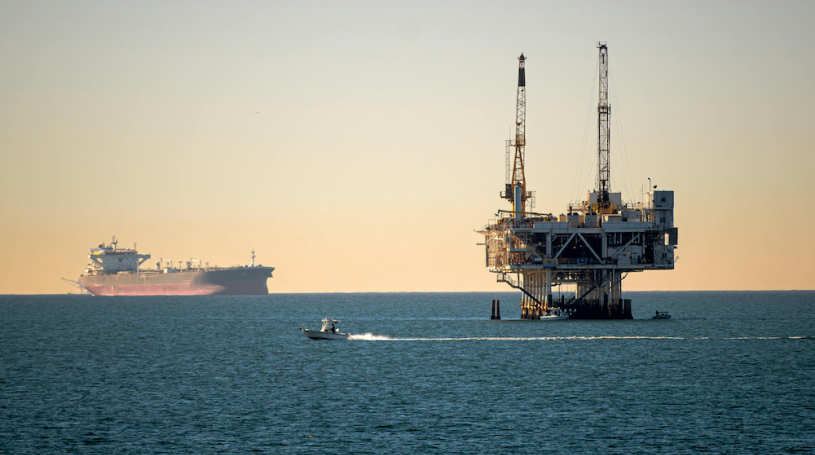
Supply chain industry body SAPICS comments on the conflict in Iran and the cost to South African businesses and consumers
Supply chain industry body SAPICS says that the effects of the war in Iran are already rippling through global supply chains and that South African businesses and consumers are unlikely to be spared. Disruptions to energy markets, maritime shipping routes and logistics insurance significantly increase the cost and complexity of moving goods to and across Africa. As businesses are forced to pay more, the burden will be passed on to consumers, SAPICS warns.
“Supply chains are highly interconnected global systems,” says SAPICS president Thato Moloi. “When geopolitical tensions affect major energy corridors or shipping routes, the consequences travel quickly through logistics networks and ultimately reach businesses and consumers everywhere.”
One of the most immediate impacts of the conflict is volatility in global oil and diesel markets. Diesel is the backbone of logistics. Trucks, freight rail networks, port equipment and agricultural machinery all depend on it. When diesel prices rise, the cost of moving goods increases almost immediately.
For African economies, where transport costs already account for a significant portion of the final price of goods, the impact can be particularly pronounced. “Higher fuel prices increase the cost of every kilometre travelled by a transporter,” says Moloi. “That cost moves through the entire supply chain and eventually shows up on store shelves.”
From food and consumer goods to construction materials and industrial inputs, rising logistics costs can ripple through the economy and contribute to broader inflationary pressures. Experts predict that expected interest rate cuts in South Africa will be delayed due the inflationary impact of the spike in oil prices caused by the war in Iran.
The conflict is also affecting global maritime routes. Major shipping companies are rerouting vessels away from danger zones and suspending trade in some areas. Rerouting vessels around the Cape of Good Hope rather than risking the faster and more efficient Trans-Suez route impacts time and costs. In addition, shipping companies are implementing surcharges for “war risks” and “emergency conflicts” for some shipments.
“For supply chain managers, longer routes translate into longer lead times, higher fuel consumption and increased freight costs. At the same time, global shipping schedules, which are already under pressure from recent disruptions, could become even less predictable,” Moloi says.
Insurance risks are adding another layer of uncertainty and potential price impacts for South African consumers at the end of global supply chains. Insurance broking and risk management experts note that war-risk premiums for vessels operating in high-risk areas have surged. Marine hull insurance rates could reportedly rise by 50 percent due to the Iran conflict. In response to rapidly changing conditions, insurers have also been issuing cancellation notices within 48 to 72 hours to reassess risk exposure and adjust premiums.
“These changes can significantly increase operating costs for shipping companies. And as with fuel and freight costs, those increases ultimately move through supply chains and into the price of goods,” Moloi explains.
“The war in Iran highlights a growing reality for supply chain professionals: disruption is no longer the exception, it is the norm,” he states. “Over the past five years alone, supply chains have faced pandemic aftershocks, geopolitical conflict, climate events, port congestion, skills shortages and cost volatility. The current Middle East conflict is another reminder that global logistics networks operate in an increasingly volatile environment. As a result, companies are shifting their approach to supply chain management. Businesses are moving away from a narrow focus on cost efficiency toward building more resilient supply chains. This includes diversifying suppliers, building buffer stock for critical goods, investing in supply chain visibility technologies and closely monitoring geopolitical risks that could disrupt transport corridors.
“Events like this show why supply chain management has become such a strategic function in modern organisations,” Moloi says. “The decisions made by supply chain managers determine how effectively businesses navigate uncertainty and how well they protect both customers and the broader economy from ongoing global disruptions. Supply chain leaders have been operating in what many describe as a state of ‘permacrisis’ for years. The organisations that have responded by redesigning their supply chains to absorb disruption, and that have invested in skilled, knowledgeable, suitably qualified supply chain professionals, will be best placed to weather the impacts of the war in Iran,” he concludes.
For more information:
Email: info@sapics.org.za
ABOUT SAPICS: http://www.sapics.org
Since 1966, SAPICS has worked to elevate, educate and empower the community of supply chain professionals in South Africa and across the continent. This is done via membership, events, the annual conference and education courses and workshops through Authorised Education Providers and others.
SAPICS is registered in South Africa as a not-for-profit company. Its mandate is to ensure that any profits made are used towards the continual development and overall benefit of individuals and organisations in the supply chain management profession.
The annual SAPICS Conference is the leading event in Africa for supply chain professionals and is now in its 48th year. The 2026 SAPICS Conference takes place in Cape Town from 19 to 22 July 2026.